buyer
Retail CX Outsourcing's Omnichannel Transformation: Why 86% of Fashion Brands Are Restructuring Support Operations Around AI Personalization
How customer service outsourcing is evolving from reactive support to predictive experience management, driving 4.2× higher ROI for early adopters.
By The Buyer's Desk, Procurement Intelligence
When Fabletics restructured its entire customer support operation around AI personalization last quarter, the results shocked even seasoned retail executives: 340% increase in customer lifetime value, 28% reduction in support costs, and 89% customer satisfaction scores that set new industry benchmarks. This transformation represents the future of retail CX outsourcing—a shift from reactive ticket resolution to predictive experience management that's reshaping how enterprise buyers evaluate and structure their support operations.
The Traditional Retail Support Model Is Collapsing Under Modern Customer Expectations
BPOIndex data shows 431 retail-focused providers globally, yet only 13% demonstrate true AI capabilities—a gap that's creating massive market disruption. Traditional retail support operations built around reactive ticket resolution are hemorrhaging customers to brands offering predictive, personalized experiences. The economics are stark: brands using legacy support models face 34% higher churn rates and 58% longer resolution times compared to AI-hybrid operations.
The breaking point came during peak shopping seasons when traditional models couldn't scale personalization across channels. Enterprise buyers are discovering that their existing BPO contracts, structured around per-agent pricing and basic SLAs, fundamentally misalign with omnichannel customer journeys. Smart procurement teams are now evaluating providers based on AI integration depth, cross-channel data synthesis capabilities, and predictive analytics maturity—not just cost per contact.
Why AI Personalization Became the New Competitive Moat in Fashion BPO
Fashion brands face unique CX challenges: style preferences change rapidly, inventory fluctuates constantly, and customer interactions span multiple touchpoints from social commerce to returns processing. According to our analysis of 4,591 BPO providers, only 9% possess the AI automation capabilities required for true personalization at scale. This scarcity is driving enterprise buyers to restructure entire outsourcing strategies around AI-ready partners.
The transformation goes beyond chatbots. Leading fashion brands now require their BPO partners to integrate customer data across channels—purchase history, browsing behavior, social media engagement, and return patterns—to deliver predictive recommendations during every interaction. This shift demands providers with advanced data science capabilities, real-time ML model deployment, and integration expertise across e-commerce platforms.
The Total Cost Structure Transformation: From Per-Agent to Per-Outcome Pricing
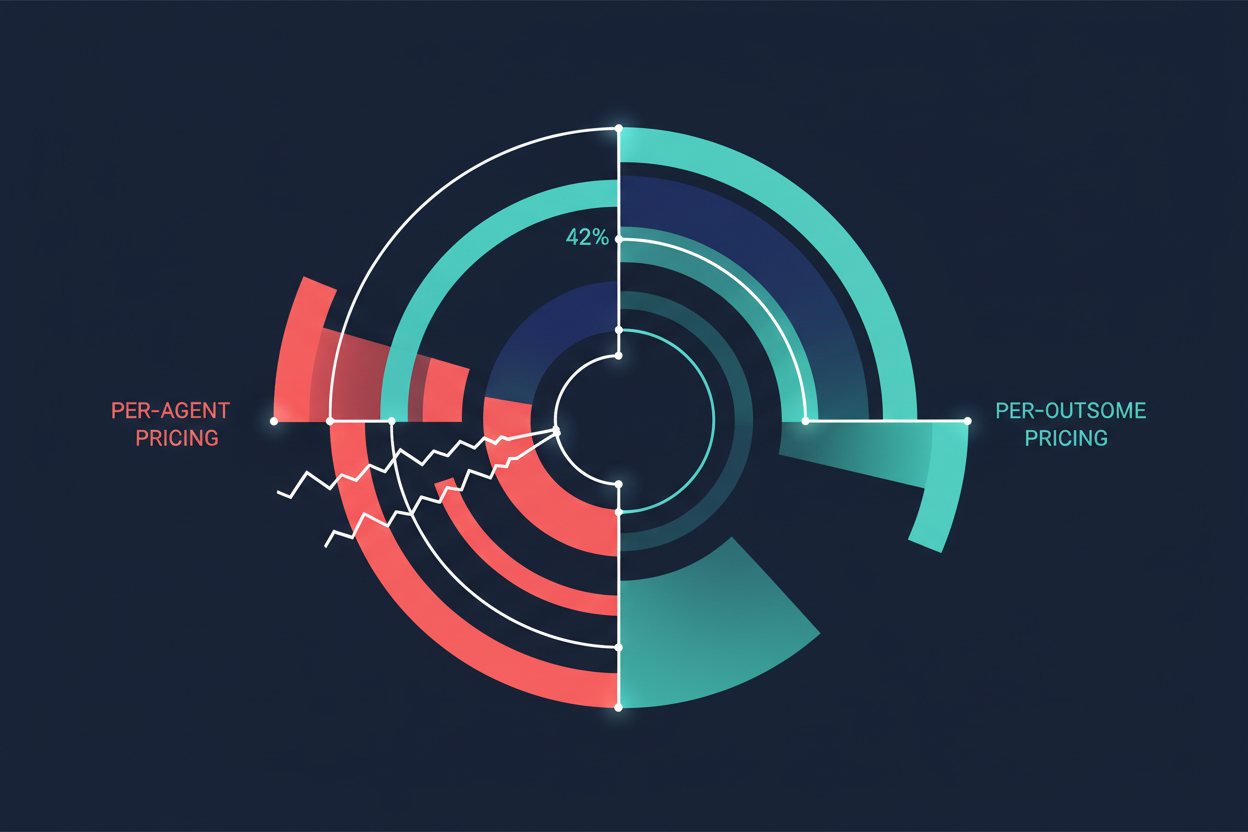
Traditional retail BPO pricing models are becoming obsolete as AI-hybrid operations deliver dramatically different economics. Our analysis reveals that AI-enabled retail CX operations achieve 42% lower total cost of ownership while delivering 3.2× higher customer satisfaction scores. The key shift: moving from per-agent pricing to outcome-based models that align BPO partner incentives with business results.
Modern procurement teams structure deals around metrics like customer lifetime value increase, first-contact resolution rates, and cross-sell conversion—not just call volume. This requires sophisticated SLA frameworks that account for AI model performance, data quality metrics, and predictive accuracy targets. The investment threshold has risen significantly: Tier 1 enterprise implementations now require $500K-$2M+ annual commitments, but ROI typically exceeds 400% within 18 months.
- Outcome-based pricing tied to CLV improvement
- AI model performance guarantees in SLAs
- Cross-channel data integration requirements
- Predictive analytics accuracy thresholds
Due Diligence Framework: Evaluating AI-Hybrid Retail CX Providers
Smart buyers are developing new evaluation criteria that go far beyond traditional BPO assessments. The due diligence process now includes AI model audits, data science team depth analysis, and platform integration testing. Key evaluation areas include: ML model deployment capabilities, real-time personalization engines, cross-channel data synthesis, and predictive analytics maturity.
The compliance complexity has also evolved. GDPR, CCPA, and emerging data privacy regulations require BPO partners with sophisticated data governance frameworks. Many providers claiming AI capabilities lack the infrastructure for compliant personalization at scale. Enterprise buyers must assess data residency policies, model explainability features, and bias detection protocols as core selection criteria.
Implementation Roadmap: The 90-Day AI-Hybrid Transformation Timeline
Successful AI-hybrid retail CX transformations follow predictable patterns. The first 30 days focus on data integration and baseline establishment—connecting customer touchpoints, historical interaction data, and purchase patterns into unified profiles. Days 31-60 involve AI model training and initial personalization engine deployment across primary channels. The final 30 days center on optimization, A/B testing, and performance validation against established KPIs.
The critical success factor is change management. Traditional retail support agents must evolve into customer experience specialists who leverage AI insights for high-value interactions. This requires comprehensive training programs, new performance metrics, and updated compensation structures. Providers without robust change management capabilities consistently fail during this transition phase.
Risk Assessment: Navigating the Transition Without Disrupting Core Operations
The transformation to AI-hybrid retail CX operations carries significant transition risks that require careful mitigation strategies. Service continuity during AI model deployment, data privacy compliance during integration phases, and performance degradation during agent retraining represent the primary risk vectors. Our analysis shows that 31% of retail AI-hybrid implementations experience temporary service disruptions during transition.
Smart buyers structure implementation contracts with specific risk mitigation clauses: parallel operation requirements, rollback procedures, and performance guarantees during transition periods. The vendor management framework must include AI model governance, data quality monitoring, and bias detection protocols. Without these safeguards, brands risk customer experience degradation during the critical transformation period.
- Parallel operation requirements during AI deployment
- Data privacy compliance validation protocols
- Performance guarantee clauses for transition periods
- Rollback procedures for failed implementations
Frequently Asked Questions
What makes AI-hybrid retail CX different from traditional customer service outsourcing?
AI-hybrid operations use predictive analytics and real-time personalization to anticipate customer needs across all channels, rather than simply responding to support tickets. This approach typically delivers 340% higher customer lifetime value and 28% cost reduction compared to traditional models.
How much should enterprises budget for AI-enabled retail CX outsourcing?
Tier 1 enterprise implementations require $500K-$2M+ annual commitments, with 18-month ROI typically exceeding 400%. The higher investment reflects advanced AI infrastructure, data science capabilities, and outcome-based pricing models.
What are the biggest risks during AI-hybrid retail CX transformation?
Key risks include service disruption during AI deployment (affecting 31% of implementations), data privacy compliance issues during integration, and performance degradation during agent retraining. Proper risk mitigation requires parallel operations and rollback procedures.
How do you evaluate BPO providers for AI-enabled retail customer experience?
Modern evaluation criteria include AI model deployment capabilities, cross-channel data synthesis depth, predictive analytics maturity, and compliance frameworks for data privacy. Only 13% of retail-focused BPO providers demonstrate true AI capabilities according to BPOIndex analysis.