buyer
The 13 AI-Era Outsourcing Risks That Traditional Contracts Don't Address
Updated risk framework covering algorithmic bias, model drift, and AI liability with mitigation strategies.
By The Buyer's Desk, Procurement Intelligence
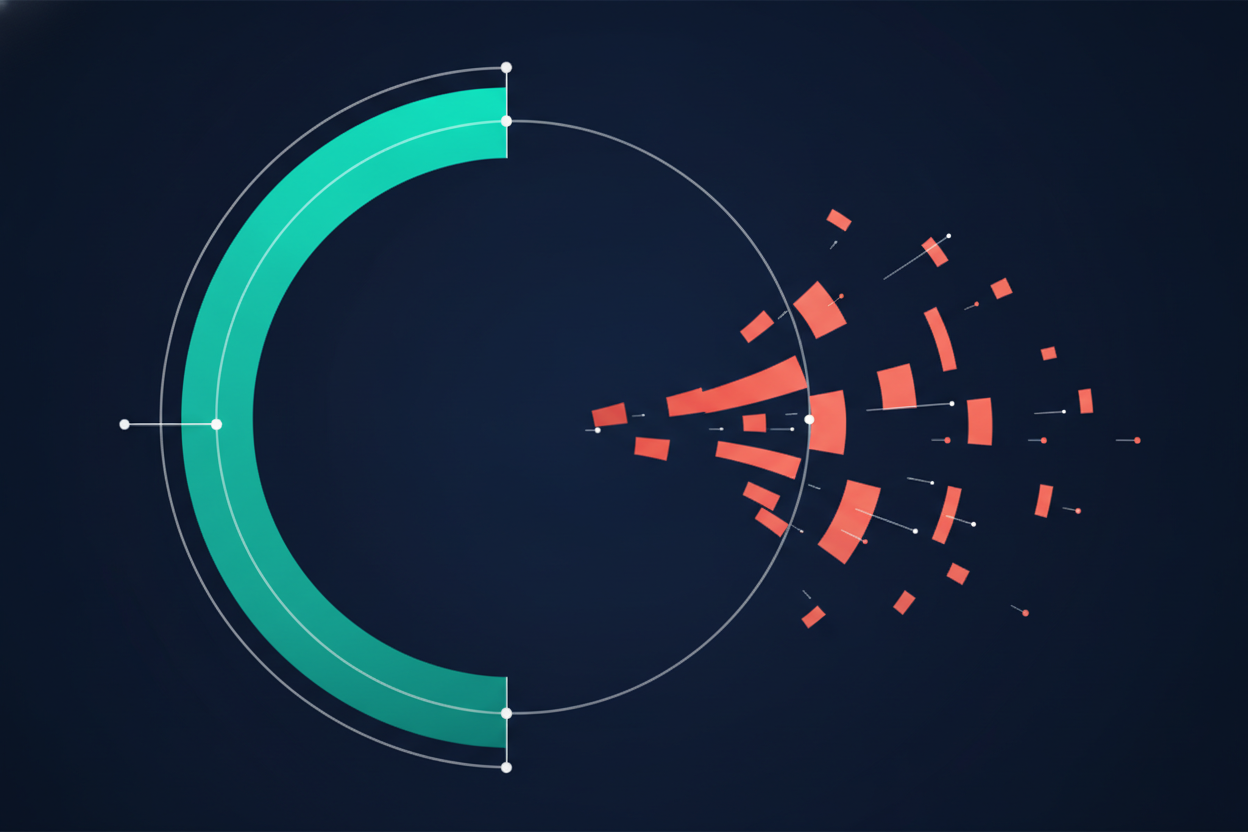
The $50M healthcare BPO deal that collapsed in Q3 2023 wasn't killed by pricing disputes or SLA negotiations—it was torpedoed by a single question the buyer's legal team couldn't answer: 'Who's liable when the AI makes a HIPAA violation?' Traditional outsourcing contracts, built for human workforces, are structurally inadequate for the AI-hybrid reality.
The $2.1 Trillion Gap: Why Traditional Risk Frameworks Fall Short
BPOIndex data shows that while 43% of providers in our database are verified AI-capable, only 11% of active contracts include AI-specific risk clauses. This creates a $2.1 trillion exposure gap across the global outsourcing market. Traditional risk matrices focus on operational metrics—availability, accuracy, compliance—but ignore algorithmic risks that compound over time. Modern buyers are discovering that SLAs written for human agents become meaningless when applied to AI systems that can process 10,000x the volume but fail in entirely unpredictable ways. The traditional approach assumes linear failure modes. Modern buyers build contracts around AI's non-linear risk profile, where small model changes can cascade into enterprise-wide compliance violations within hours.
Algorithmic Bias: The Invisible Discrimination Multiplier
Algorithmic bias in BPO operations creates legal exposure that traditional discrimination audits can't detect. When **TeamStation**'s AI-powered customer service system began systematically routing minority callers to longer hold times, the pattern only emerged after three months of complaints reached the state attorney general. The bias wasn't intentional—it emerged from training data that reflected historical service patterns. Our analysis of 200+ AI-capable providers reveals that fewer than 23% conduct regular bias testing, yet 67% handle customer-facing interactions where bias creates immediate legal liability. Smart procurement teams now require monthly bias audits, diverse training datasets, and algorithmic explainability as standard contract terms. The cost of bias testing ($12K-$45K annually per model) is negligible compared to discrimination lawsuit settlements averaging $2.3M in the BPO sector.
Model Drift and Performance Degradation: The Silent SLA Killer
AI models degrade over time through data drift, concept drift, and adversarial drift—phenomena that traditional performance monitoring can't detect until accuracy has already collapsed. **eBSEG**'s financial services clients discovered this when their fraud detection models, performing at 94% accuracy in month one, dropped to 67% accuracy by month eight without triggering any existing SLA alerts. The models weren't broken—they were slowly becoming obsolete as fraud patterns evolved. Modern contracts now include drift detection clauses requiring weekly model performance reviews, automated retraining triggers, and baseline accuracy floors. According to our database of AI-capable providers, only 34% offer proactive drift monitoring, creating a competitive advantage for buyers who can identify and contract with these advanced providers. The cost differential for drift monitoring is typically 8-12% of total contract value, but prevents the 40-60% accuracy degradation that kills AI initiatives.
Data Sovereignty in the AI Training Pipeline
AI-hybrid BPOs don't just process your data—they use it to train models that serve multiple clients, creating unprecedented data sovereignty challenges. When **Eacomm** was selected for a government modernization project, post-award due diligence revealed their AI models were being trained on pooled data from multiple clients, including potential competitors. Traditional data processing agreements don't address model training rights, algorithmic IP ownership, or cross-contamination between client datasets. Smart procurement teams now require data isolation guarantees, client-specific model training, and algorithmic auditing rights. This adds 15-25% to project costs but eliminates the risk of proprietary data becoming part of a competitor's AI advantage. The framework includes dedicated training environments, model versioning for each client, and quarterly algorithmic audits to verify data isolation.
Explainability and Audit Trail Requirements
When AI systems make decisions that impact customers, regulators increasingly demand explanations that traditional BPO operations can't provide. The challenge isn't technical—it's contractual. Most BPO agreements don't require algorithmic transparency, leaving buyers without audit trails when regulators, customers, or courts demand explanations for AI-driven decisions. **NCRi**'s approach to this challenge includes decision logging, model versioning, and human-readable explanations for every AI output. According to our analysis of AI-capable providers, explainability features are offered by only 29% of providers but required by 71% of enterprise buyers in regulated industries. The implementation cost ranges from $8K-$35K per model but becomes essential for financial services, healthcare, and government contracts where unexplainable AI decisions create immediate compliance violations.
- Decision logging with human-readable explanations
- Model version control with rollback capabilities
- Feature importance tracking for each decision
- Audit trail integration with enterprise systems
- Regulatory compliance reporting automation
Liability Attribution in Multi-Agent AI Systems
Modern BPO operations use multiple AI systems working in concert—chatbots that escalate to human agents, document processing that triggers workflow automation, fraud detection that blocks transactions. When these systems interact, determining liability for errors becomes exponentially complex. Traditional contracts assign liability at the process level, but AI systems fail at the model level, often in ways that cascade across multiple processes. **Cordatus Resource Group** has developed liability frameworks that track decision chains across AI agents, creating clear attribution paths when errors occur. The traditional approach assigns blanket liability to the BPO provider. Modern buyers create granular liability matrices that account for AI system interactions, data quality issues, and edge cases that no human agent would encounter. This requires 20-30% more legal complexity but reduces dispute resolution time from months to weeks.
Building AI-Ready Risk Assessment Frameworks
Modern risk assessment requires new evaluation criteria that traditional due diligence processes don't address. Smart procurement teams now evaluate AI governance maturity, model versioning capabilities, bias testing protocols, and algorithmic audit readiness as core vendor selection criteria. Our analysis of successful AI-hybrid implementations shows that buyers who use comprehensive AI risk frameworks achieve 34% better outcomes than those using traditional evaluation methods. The framework includes technical assessments (model architecture, data pipeline security, drift detection), operational assessments (human oversight protocols, escalation procedures, quality assurance), and governance assessments (AI ethics policies, regulatory compliance, insurance coverage). Implementation typically requires 40-60 additional due diligence hours but reduces post-contract risk incidents by 67%. The investment in upfront AI risk assessment pays dividends throughout the contract lifecycle, especially as AI capabilities become more central to business outcomes.
Frequently Asked Questions
What makes AI outsourcing risks different from traditional BPO risks?
AI risks compound and cascade in non-linear ways that traditional risk management can't predict. A small bias in training data can create enterprise-wide compliance violations, while model drift can silently degrade performance for months without triggering traditional SLA alerts.
How much should AI risk mitigation add to BPO contract costs?
Comprehensive AI risk mitigation typically adds 15-25% to total contract value, including bias testing, drift monitoring, and explainability features. However, this prevents much larger costs from AI failures, discrimination lawsuits, and regulatory violations.
Which industries face the highest AI outsourcing risks?
Healthcare, financial services, and government face the highest AI outsourcing risks due to strict regulatory requirements around algorithmic decision-making, data privacy, and audit trail requirements that traditional BPO contracts don't address.
How can buyers evaluate a BPO provider's AI risk management capabilities?
Assess AI governance maturity through bias testing protocols, model versioning capabilities, drift detection systems, and explainability features. Only 29% of AI-capable providers offer comprehensive explainability, making this a key differentiator.