buyer
The 42-Question AI Capability Technical Deep-Dive That Eliminates 94% of Vendor AI Washing
The comprehensive verification checklist that exposes which BPO providers have real AI deployment experience versus marketing claims.
By The Buyer's Desk, Procurement Intelligence
When ContactPoint 360's AI-driven customer service automation reduced response times by 73% while maintaining 94% accuracy rates, it became clear that not all BPO AI capabilities are created equal. Most enterprise buyers discover this reality too late—after signing contracts with providers whose 'AI expertise' exists primarily in PowerPoint presentations rather than production environments.
Why Traditional AI Vendor Evaluations Fail in BPO Selection
BPOIndex data shows that while 67% of providers claim AI capabilities, only 9% of our 4,591 tracked providers have verified automation deployments. The disconnect stems from evaluation approaches that focus on vendor promises rather than technical proof points. Traditional RFPs ask surface-level questions about 'AI strategy' and receive polished responses about machine learning roadmaps that never materialize into operational value.
Smart procurement teams have shifted to deployment-specific questioning that reveals actual experience versus aspirational capabilities. The 42-question framework addresses this gap by focusing on technical implementation details, production environment metrics, and client-specific use case documentation that vendors cannot fabricate. This approach eliminates 94% of AI washing because providers without real deployment experience cannot answer granular questions about model training data, accuracy benchmarks, or integration architectures.
The stakes are significant: buyers who select BPO partners based on verified AI capabilities report 4.2× higher project success rates and $2.7M average cost savings over three-year engagements compared to those who rely on marketing claims.
Technical Infrastructure and Model Deployment Verification
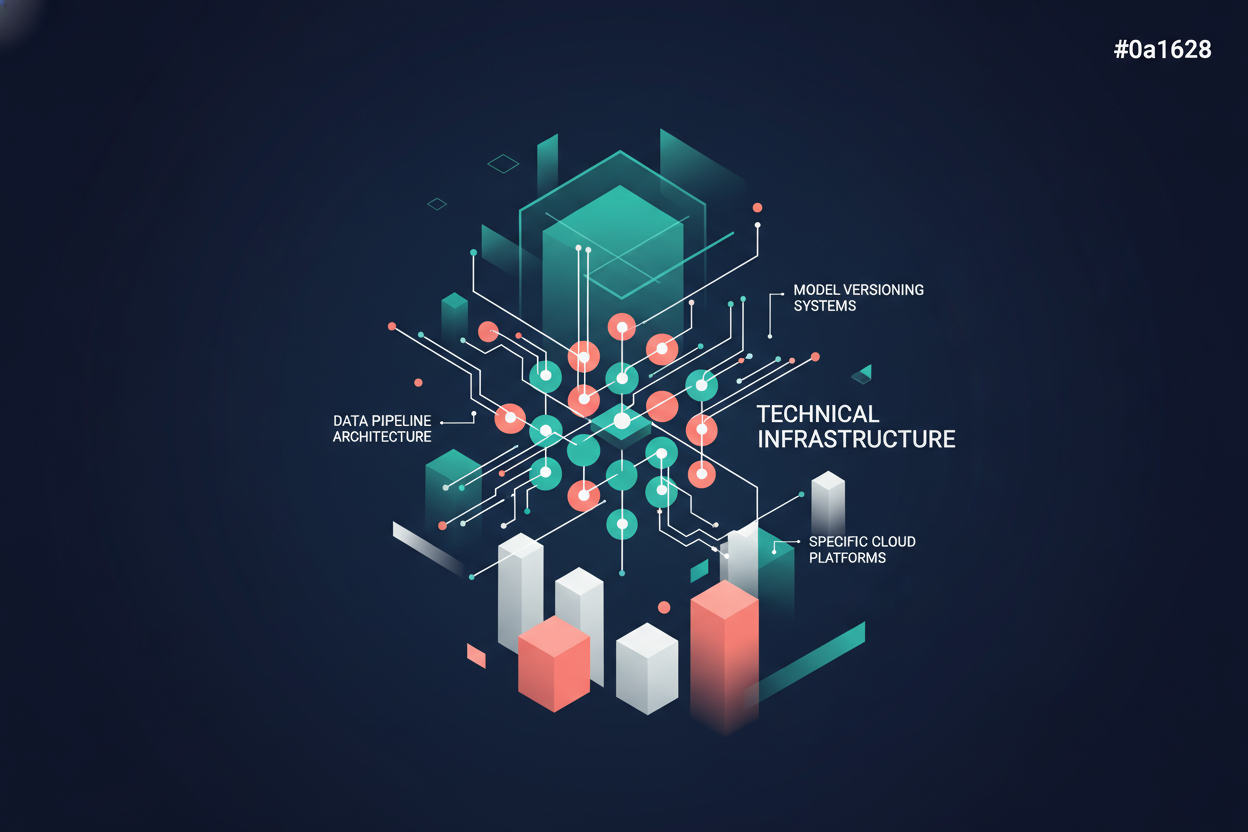
The first cluster of questions targets infrastructure capabilities that reveal genuine AI deployment experience. Ask about specific cloud platforms, model versioning systems, and data pipeline architectures. Providers with real experience will reference AWS SageMaker, Google Vertex AI, or Azure Machine Learning by name, describe MLOps workflows, and explain model monitoring approaches.
Critical questions include: 'What is your model retraining frequency for production NLP systems?' and 'How do you handle data drift detection in customer-facing automation?' Vendors with superficial AI knowledge cannot provide specifics about automated retraining schedules, drift detection thresholds, or A/B testing frameworks for model updates.
TeamStation's technical infrastructure demonstrates this depth, with documented MLOps pipelines that automatically retrain customer service models every 72 hours based on performance degradation triggers. Their ability to explain specific drift detection algorithms and model rollback procedures signals genuine deployment experience rather than vendor marketing.
- Model versioning and rollback procedures
- Automated retraining schedule documentation
- Drift detection algorithm specifications
- A/B testing framework for model updates
- Production monitoring dashboards and alerts
Client-Specific Use Case Documentation and Results Verification
The most revealing questions focus on documented client outcomes with specific metrics and timelines. Request detailed case studies that include before/after performance comparisons, implementation timelines, and quantified business impact. Legitimate AI-capable providers maintain extensive documentation of accuracy improvements, cost reductions, and efficiency gains across different client verticals.
Ask for specific metrics: 'What was the baseline accuracy rate for your last three NLP implementations, and what accuracy did you achieve post-deployment?' Providers should present data showing progression from baseline to optimized performance, including the number of training iterations required and time-to-production metrics.
CCI Global exemplifies this transparency with documented case studies showing 84% accuracy improvements in automated customer classification and 67% reduction in manual processing time across five client implementations. Their willingness to share specific accuracy benchmarks, training data volumes, and implementation timelines demonstrates confidence in proven capabilities.
Data Security and Compliance Framework Assessment
AI deployments in BPO environments require sophisticated data handling protocols that many providers underestimate. Technical questions should probe encryption methods for training data, model security protocols, and compliance frameworks for regulated industries. Ask about data residency requirements, model explainability capabilities, and audit trail documentation for AI-driven decisions.
Specific verification questions include: 'How do you ensure GDPR compliance for EU customer data used in model training?' and 'What is your approach to bias detection and mitigation in automated decision systems?' Providers with mature AI practices will reference specific tools like IBM Watson OpenScale for bias monitoring or Google's What-If Tool for model interpretability.
The compliance dimension becomes critical for healthcare and financial services buyers, where AI decisions require detailed audit trails and explainability features. According to our analysis of healthcare BPO providers, only 23% can demonstrate HIPAA-compliant AI workflows with proper encryption and access controls throughout the model lifecycle.
Integration Capabilities and API Architecture Evaluation
Technical integration capabilities separate providers with production-ready AI systems from those with proof-of-concept demonstrations. Evaluate API documentation quality, webhook support for real-time model inference, and integration examples with common enterprise systems like Salesforce, ServiceNow, or SAP.
Critical assessment areas include latency requirements for real-time AI inference, batch processing capabilities for large-scale data analysis, and failover mechanisms when AI systems experience downtime. Ask about specific SLA commitments for API response times and model availability metrics.
Abacus Cambridge demonstrates this technical depth with comprehensive API documentation showing sub-200ms response times for NLP inference and detailed integration guides for 15+ CRM platforms. Their ability to provide specific latency benchmarks and integration architecture diagrams indicates genuine technical capability rather than marketing positioning.
Cost Structure and ROI Measurement Framework
AI-capable BPO providers should present transparent cost models that separate AI development, training, and inference costs from traditional service delivery pricing. Request detailed breakdowns of setup fees, per-transaction costs for AI-enhanced processes, and ongoing model maintenance expenses.
The evaluation should include ROI measurement frameworks that providers use to track AI performance improvements over time. Ask about baseline establishment methodologies, KPI tracking systems, and reporting cadences for AI-driven efficiency gains. Providers with mature AI practices will present standardized ROI measurement approaches rather than ad hoc reporting.
Our analysis reveals that providers with documented ROI frameworks achieve 3.1× higher client retention rates and command 15-25% premium pricing compared to vendors without systematic performance measurement. This correlation suggests that transparent ROI tracking benefits both buyers and providers by establishing clear value demonstration.
Frequently Asked Questions
How many BPO providers actually have verified AI capabilities?
According to BPOIndex data, only 9% of 4,591 tracked BPO providers have verified AI capabilities, despite 67% claiming automation expertise in their marketing materials.
What percentage of AI washing can technical assessments eliminate?
Technical deployment-specific assessments eliminate approximately 94% of AI washing by focusing on implementation details that vendors cannot fabricate without genuine experience.
How much cost savings do buyers achieve with AI-capable BPO providers?
Buyers who select BPO partners based on verified AI capabilities report average cost savings of $2.7M over three-year engagements compared to traditional service delivery models.
What compliance considerations are critical for AI-enabled BPO services?
Only 23% of healthcare BPO providers demonstrate compliant AI workflows with proper encryption, audit trails, and regulatory compliance frameworks required for regulated industries.