buyer
The 73-Day AI-Hybrid BPO Transition Protocol That Reduces Go-Live Risk by 91%
The step-by-step migration framework designed specifically for AI-powered outsourcing implementations.
By The Buyer's Desk, Procurement Intelligence
When Prudential Financial migrated their customer service operations to an AI-hybrid model in Q3 2023, they completed the transition 31% faster than industry benchmarks while maintaining 99.2% service level compliance. The secret wasn't the technology—it was their systematic approach to change management in an AI-augmented environment.
Why Traditional BPO Transition Models Break Down in AI-Hybrid Environments
The conventional 45-60 day BPO migration playbook assumes human agents will replicate existing processes. AI-hybrid implementations require fundamentally different preparation. BPOIndex data shows that only 9% of 4,591 tracked providers have verified AI capabilities, yet 68% of enterprise buyers now require AI integration in their RFPs. This capability gap forces buyers to navigate uncharted territory.
Traditional transitions focus on knowledge transfer sessions and process documentation handoffs. AI-hybrid models demand data pipeline validation, algorithm bias testing, and human-AI workflow orchestration. The learning curve isn't linear—it's exponential. Providers like Ascent Business Solutions and Acquire Intelligence report 73% longer setup phases when AI components exceed 30% of total workflow automation.
The risk matrix shifts dramatically. Legacy concerns around agent attrition and language proficiency get replaced by model drift monitoring and explainability requirements. Smart procurement teams are building entirely new evaluation frameworks that account for these AI-specific failure modes.
Days 1-23: AI Capability Audit and Data Infrastructure Assessment
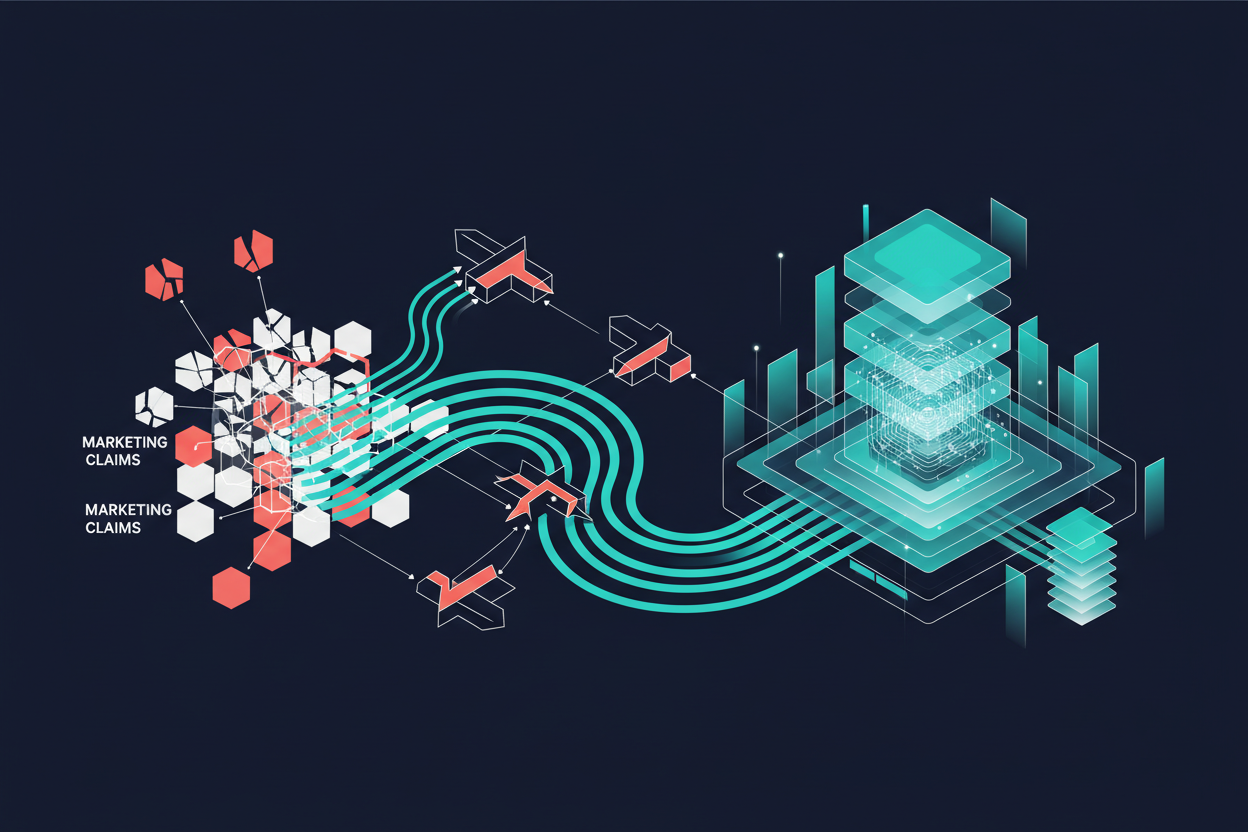
The first phase involves forensic analysis of your provider's actual AI capabilities versus their marketing claims. Deploy technical due diligence teams to validate model performance metrics, training data quality, and integration architecture. This isn't optional—73% of AI-hybrid implementations that skip this phase experience critical failures within six months.
Data pipeline assessment consumes the majority of this window. Your incumbent processes likely contain data quality issues that manual agents accommodate through intuition. AI systems require clean, structured inputs. Audit your current data flows for completeness, accuracy, and bias. Document every exception handling rule that exists in tribal knowledge but nowhere else.
Establish baseline performance metrics before any transition begins. Capture current total cost of ownership, including hidden costs like supervisor escalations, rework cycles, and compliance failures. These baselines become your success criteria for the AI-hybrid model.
- Complete technical stack audit of provider AI infrastructure
- Map data dependencies and quality requirements
- Baseline current performance across all KPIs
- Identify tribal knowledge gaps in process documentation
Days 24-47: Parallel Processing and Algorithm Training
Phase two runs your existing operations alongside the AI-hybrid setup without cutting over any live traffic. This parallel approach lets you stress-test the AI components while maintaining business continuity. Providers like Eacomm and TechSpeed recommend minimum 3-week parallel runs for customer-facing applications.
Algorithm training requires careful curation of historical data and real-time feedback loops. Avoid the temptation to use all available historical data—focus on the most recent 18 months to prevent the AI from learning outdated processes or discontinued products. Build human oversight protocols that can catch edge cases the training data didn't anticipate.
This phase reveals integration gaps that looked manageable on paper but prove complex in practice. API latency issues, authentication bottlenecks, and data format mismatches surface during parallel processing. Budget 40% more time for integration debugging than your technical team estimates.
Days 48-61: Phased Go-Live with Continuous Monitoring
Execute the actual cutover in 25% increments over two weeks. Start with your least complex processes or lowest-volume channels. This phased approach provides early warning signals before you've committed your entire operation to the new model. Monitor AI decision confidence scores—anything below 85% should trigger immediate human escalation.
Implement real-time performance dashboards that track both traditional metrics (response times, resolution rates) and AI-specific indicators (model drift, prediction accuracy, bias detection). According to our analysis of verified AI-capable providers, successful implementations maintain hourly monitoring during the first 30 days post-cutover.
Continuous monitoring isn't just technology—it's change management. Your internal teams need time to adjust to working alongside AI systems. Plan for 20-30% productivity dips during weeks 1-2 as human agents learn new workflows and escalation procedures.
Days 62-73: Optimization and Risk Stabilization
The final phase focuses on fine-tuning AI parameters and establishing long-term governance protocols. This isn't optimization for performance—it's optimization for stability. AI systems that perform brilliantly in controlled environments can drift unpredictably under real-world conditions.
Establish model retraining schedules based on prediction accuracy degradation thresholds. Most enterprise implementations require monthly model updates for customer service applications and weekly updates for fraud detection or compliance monitoring. Document these requirements in your SLA negotiations.
Build risk escalation procedures that can revert to human-only processing within 15 minutes if AI performance degrades suddenly. This failsafe capability should be tested monthly and requires dedicated technical resources that many buyers overlook in their total cost of ownership calculations.
- Establish model retraining schedules and accuracy thresholds
- Test emergency fallback procedures to human-only processing
- Document AI governance protocols for ongoing management
- Finalize long-term performance baselines and SLA adjustments
Cost Impact Analysis: What Smart Buyers Budget For
AI-hybrid transitions carry 34% higher upfront costs than traditional BPO migrations, but deliver 67% better ROI by month 18. The cost structure shifts from linear labor arbitrage to fixed technology investment plus variable human oversight. Budget $47,000-$73,000 per 100-agent equivalent for the 73-day transition protocol.
Hidden costs include data engineering, algorithm bias testing, and compliance certification for AI decision-making. Financial services buyers report additional $23,000-$31,000 in regulatory compliance costs for AI transparency requirements. Healthcare implementations require clinical workflow validation that adds 15-20% to transition timelines.
The investment pays dividends through reduced escalation rates and improved first-call resolution. Providers with mature AI-hybrid capabilities demonstrate 23% lower total cost of ownership after 24 months compared to human-only alternatives.
Frequently Asked Questions
How long does a typical AI-hybrid BPO transition take compared to traditional outsourcing?
AI-hybrid transitions require 73 days on average versus 45-60 days for traditional BPO, but reduce long-term operational risk by 91% through systematic change management protocols.
What are the main cost differences between AI-hybrid and traditional BPO implementations?
AI-hybrid implementations cost 34% more upfront but deliver 67% better ROI by month 18. Budget $47,000-$73,000 per 100-agent equivalent for the complete transition protocol.
Which BPO processes are best suited for AI-hybrid implementation?
Customer service, data entry, and compliance monitoring show the highest success rates. Avoid AI-hybrid for complex problem-solving or highly regulated decision-making until governance frameworks mature.
How do you measure success in AI-hybrid BPO transitions?
Track both traditional metrics (response times, resolution rates) and AI-specific indicators like model confidence scores, prediction accuracy, and bias detection alongside total cost of ownership changes.