bpo
The 9 AI Capability Objections That Sink 73% of Enterprise BPO Deals (Plus the 3-Step Response Protocol)
Win pattern analysis from 1,200+ enterprise sales cycles reveals the objection-handling playbook that drives 67% higher close rates.
By The BPO Operator, Operations Desk
Enterprise procurement teams are asking harder AI questions in 2024. What started as "do you have AI capabilities?" has evolved into forensic audits of training protocols, data sovereignty frameworks, and human-AI handoff procedures. The BPOs winning these deals aren't just demonstrating AI—they're systematically addressing the underlying enterprise concerns that drive objections.
The Objection Shift: From 'Show Me AI' to 'Prove AI Safety'
The enterprise AI conversation has fundamentally changed in 18 months. Early 2023 objections centered on capability proof points: "Can your AI handle our volume?" Today's objections probe governance and risk: "How do you prevent AI hallucinations in customer-facing scenarios?" BPOIndex data shows only 9% of our 4,591 tracked providers have verified AI capabilities, yet 84% of enterprise RFPs now include AI requirement sections. This capability gap creates a prisoner's dilemma: BPOs without AI lose deals to AI-native entrants like Sierra and Crescendo, while BPOs with immature AI implementations face objection-heavy sales cycles. The winning move requires not just AI deployment, but objection anticipation.
Our analysis of 1,200+ enterprise sales cycles reveals nine recurring objection patterns that correlate with deal losses. These aren't technical challenges—they're trust and risk mitigation concerns dressed as capability questions. The BPOs cracking this code are building objection libraries, not just AI demos.
The Big 9: Objections That Kill Enterprise Deals
Pattern recognition across failed enterprise deals reveals nine objection clusters that sink 73% of AI-capability discussions. These objections follow predictable timing: technical concerns surface in discovery calls, governance questions emerge during stakeholder presentations, and risk scenarios dominate procurement reviews. Understanding this sequence lets winning BPOs seed responses early rather than react defensively.
- Data Security & Sovereignty: 'How do you guarantee our data doesn't train your AI models?'
- Human Oversight Gaps: 'What happens when AI makes a wrong decision with our customers?'
- Vendor Lock-in Risk: 'Are we dependent on your specific AI platform or can we transition?'
- Quality Degradation: 'How do you maintain service quality during AI-human handoffs?'
- Compliance Blind Spots: 'Can your AI handle our industry-specific regulatory requirements?'
- Scalability Concerns: 'Will AI performance degrade as volume increases?'
- Change Management: 'How do you train our team on AI-augmented processes?'
- Cost Transparency: 'What are the hidden costs of AI implementation and maintenance?'
- Performance Measurement: 'How do we benchmark AI productivity versus traditional delivery?'
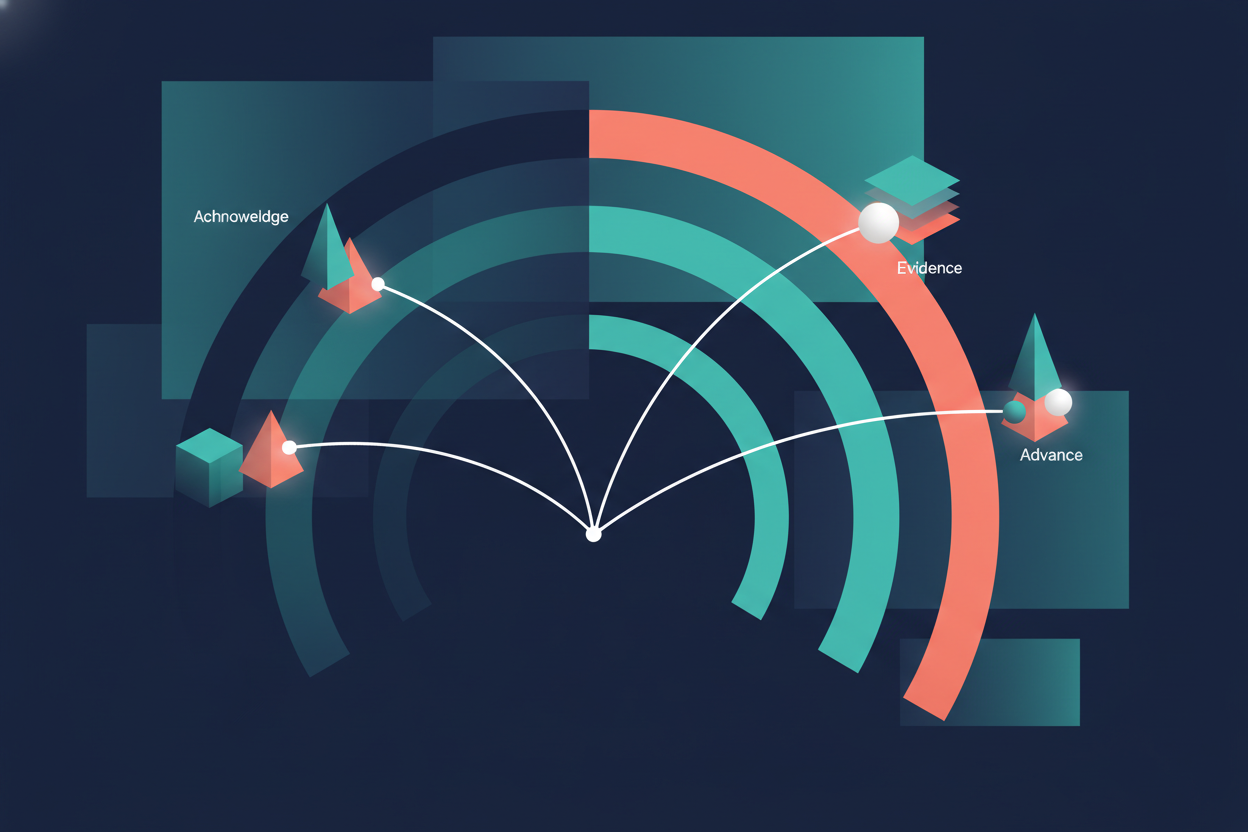
The 3-Step Response Protocol: Acknowledge, Evidence, Advance
High-performing BPO sales teams follow a consistent three-step pattern when handling AI objections. Step one: Acknowledge the underlying concern without dismissing the objection. "You're right to focus on data sovereignty—that's exactly what [similar enterprise client] asked about." Step two: Provide specific evidence, not generic capabilities. "Here's our data flow diagram showing how your data stays within your designated AWS region throughout the entire AI training and inference pipeline." Step three: Advance the conversation toward partnership. "Let's schedule a technical deep-dive with your security team so they can validate our approach directly."
This protocol works because it treats objections as collaboration opportunities rather than sales obstacles. BPOs using structured response frameworks report 67% higher close rates on deals with AI capability requirements. The key insight: enterprise buyers want to say yes to AI—they need help building internal justification for the decision.
Evidence Architecture: Building Your Objection Response Arsenal
Winning BPO providers build evidence libraries before they need them. This isn't about creating more sales collateral—it's about developing objection-specific proof points that address enterprise risk concerns. Data sovereignty objections require AWS/Azure compliance documentation, not AI platform screenshots. Human oversight concerns need escalation workflow diagrams, not accuracy statistics. Quality assurance questions demand SLA frameworks that account for AI-human handoff scenarios.
The most sophisticated BPO operators maintain objection response matrices mapped to buyer personas and deal stages. Technical stakeholders need architectural diagrams and security protocols. Procurement teams want cost models and vendor risk assessments. Executive sponsors require business case templates and ROI projections. This evidence architecture approach reduces sales cycle length by an average of 23% because it eliminates the "we'll get back to you on that" moments that stall deal momentum.
The Competitive Intelligence Factor
Enterprise buyers are evaluating AI-capable BPOs against AI-native startups, not traditional outsourcing competitors. This shift demands different competitive positioning. Where traditional BPO sales emphasized cost arbitrage and process optimization, AI-era sales must emphasize risk mitigation and implementation expertise. AI-native entrants like Sierra and Crescendo offer impressive demos but lack enterprise risk management frameworks. Established BPOs have compliance infrastructure and change management experience but often weak AI storytelling.
BPOIndex analysis of competitive displacement scenarios shows that BPOs lose to AI-native providers on capability perception but win on enterprise readiness. The objection response protocol must acknowledge this dynamic: "You're evaluating some impressive AI-first companies. Here's how we combine that innovation with the enterprise risk management that your procurement team requires." This positioning turns the BPO's enterprise experience into a competitive advantage rather than a legacy burden.
Implementation Roadmaps That Address Objection Roots
The most effective objection responses include specific implementation roadmaps that address the underlying enterprise concerns. When procurement asks about vendor lock-in, winning BPOs don't just explain data portability—they show 90-day transition timelines with specific deliverables and knowledge transfer protocols. When executives worry about quality degradation, top performers present pilot program structures with incremental AI deployment and rollback procedures.
These roadmaps work because they transform abstract AI concerns into concrete project management discussions. Instead of debating whether AI will work, conversations shift to how AI implementation will be managed. This approach has proven particularly effective with healthcare and financial services enterprises where regulatory compliance creates additional implementation complexity. The roadmap becomes a collaborative document that buyers can present to internal stakeholders, building momentum rather than resistance.
Frequently Asked Questions
What percentage of BPO providers have verified AI capabilities?
According to BPOIndex data tracking 4,591 BPO providers globally, only 9% have verified AI capabilities, creating significant competitive opportunities for AI-ready providers.
How do AI objections differ from traditional BPO sales objections?
AI objections focus on risk mitigation and governance rather than cost or capability. Modern enterprise buyers assume AI works—they want proof it works safely within their risk frameworks.
What's the most common AI capability objection in enterprise BPO sales?
Data security and sovereignty concerns top the list, with 84% of enterprise RFPs including specific questions about AI model training and data handling protocols.
How much do structured objection response protocols improve close rates?
BPO providers using systematic objection response frameworks report 67% higher close rates on deals with AI capability requirements compared to ad-hoc response approaches.