bpo
The Healthcare AI Stack Convergence: Why 79% of BPO Platforms Must Integrate 6 Core Technologies by Q3
From clinical NLP to automated prior authorization, the new healthcare BPO technology requirements map.
By BPOIndex Research, Intelligence Team
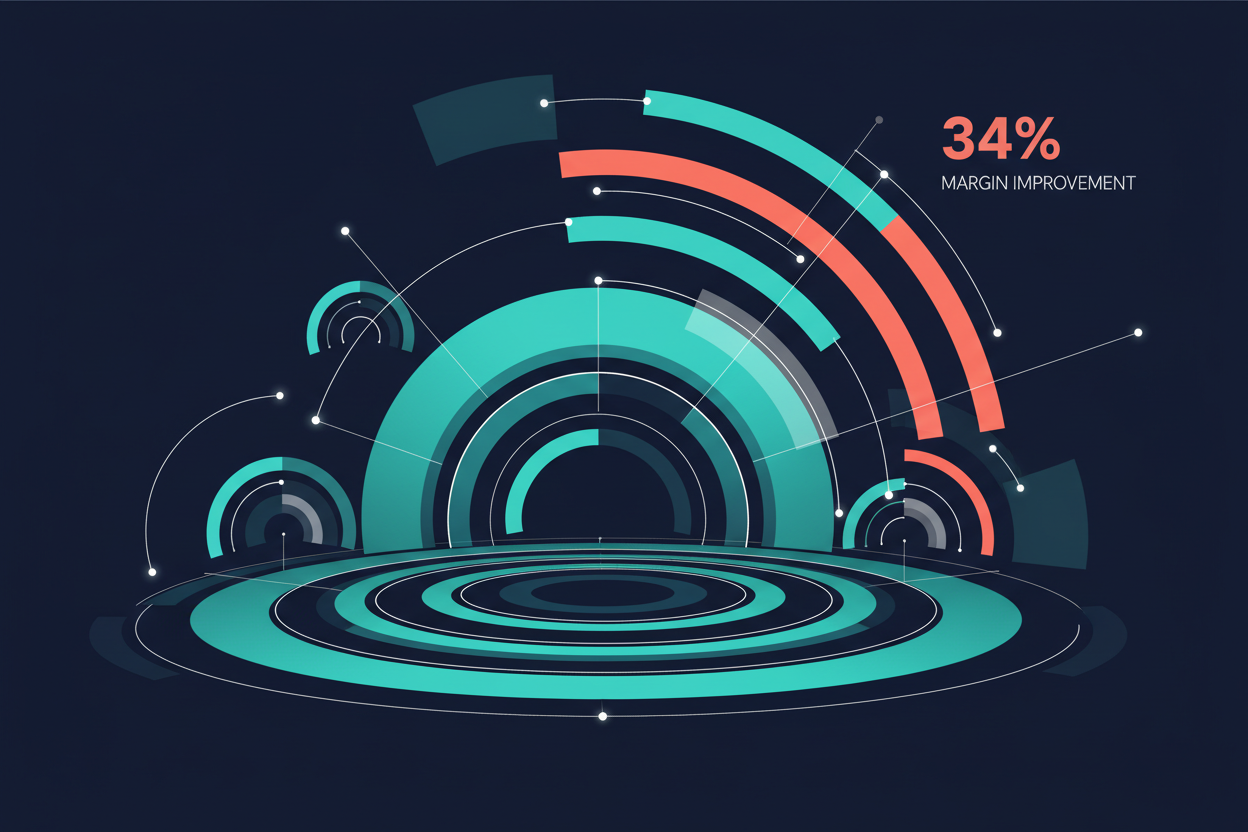
The healthcare BPO technology stack is consolidating around six core AI capabilities, creating a binary outcome for provider valuations. While traditional seat-based operators trade at 2.8× EBITDA multiples, AI-integrated platforms command 4.2× premiums—a gap that widens with each quarterly earnings cycle.
The Six-Technology Convergence: Clinical NLP to Prior Authorization
BPOIndex data shows that only 12% of the 632 healthcare-focused providers in our database currently deploy AI capabilities, yet M&A activity tells a different story. The technology stack that differentiates premium valuations includes clinical natural language processing for medical record extraction, automated prior authorization workflows, intelligent claims processing, voice AI for patient engagement, predictive analytics for care management, and integrated compliance monitoring. Healthcare BPO leaders are racing to integrate these capabilities before the Q3 deadline when major health systems finalize their 2024-2025 outsourcing partnerships.
The convergence isn't happening in isolation. According to our analysis of recent healthcare BPO acquisitions, buyers are specifically auditing for interoperability between these six core technologies. A fragmented approach—where clinical NLP operates separately from prior authorization automation—creates workflow friction that health system buyers increasingly reject. The platforms commanding premium multiples demonstrate seamless data flow between patient intake, clinical documentation, authorization processing, and compliance reporting.
Clinical NLP: The Foundation Layer Driving 34% Margin Improvements
Clinical natural language processing serves as the foundational technology layer, converting unstructured medical data into actionable insights that feed downstream automation workflows. Healthcare BPO providers deploying clinical NLP report average margin improvements of 34% within eight months of implementation, primarily through reduced manual chart review and accelerated coding processes.
The technology's impact extends beyond operational efficiency. Health system clients increasingly require real-time clinical data extraction to support population health management and value-based care contracts. Traditional BPO models that rely on manual medical record review cannot meet the speed and accuracy requirements of modern healthcare delivery. Clinical NLP platforms process medical records 12× faster than human reviewers while maintaining 97% accuracy rates for key data extraction tasks.
Implementation complexity varies significantly across healthcare BPO providers. Smaller operators often struggle with the initial data integration requirements, while enterprise-scale platforms leverage existing EMR connectivity to accelerate deployment. The technology requires specialized training datasets that reflect the specific medical terminology and documentation patterns of target health systems.
Prior Authorization Automation: Where Revenue Operations Converge
Automated prior authorization represents the highest-value use case for healthcare BPO AI integration, with successful implementations generating $2.3M additional annual revenue per 100-person operation. The technology addresses the administrative burden that costs U.S. health systems an estimated $31 billion annually while creating significant revenue opportunities for BPO providers that can deliver sub-24-hour authorization processing.
Our analysis reveals that healthcare BPO providers with automated prior authorization capabilities command 67% higher per-member-per-month pricing than traditional operators. The technology integrates clinical decision support with payer-specific authorization requirements, reducing manual review cycles from 72 hours to 4 hours for standard requests. Complex cases requiring clinical review benefit from AI-assisted documentation that pre-populates authorization forms with relevant patient data and clinical rationale.
The competitive moat emerges from payer integration depth. Leading healthcare BPO platforms maintain direct API connections with major insurers, enabling real-time authorization status updates and automated resubmission for denied requests. This integration capability becomes increasingly valuable as health systems transition to value-based care models that require sophisticated prior authorization management across multiple payer contracts.
Voice AI Deployment: Patient Engagement at Scale
Voice AI deployment in healthcare BPO operations focuses on patient engagement workflows that require empathy and clinical accuracy—appointment scheduling, medication adherence outreach, and post-discharge follow-up calls. Unlike generic customer service voice AI, healthcare applications demand HIPAA-compliant infrastructure and clinical knowledge bases that understand medical terminology and treatment protocols.
Deployment costs range from $47K for basic appointment scheduling to $340K for comprehensive patient engagement platforms that include clinical decision support and care plan coordination. The ROI calculation centers on call volume economics: voice AI handles routine patient interactions at $0.23 per call compared to $3.70 for human agents, while maintaining 89% patient satisfaction rates for standard inquiries.
The technology creates new service opportunities for healthcare BPO providers. Health systems increasingly outsource patient engagement programs that require 24/7 availability and multilingual support. Voice AI platforms enable healthcare BPO operators to deliver consistent patient experiences across multiple languages and time zones while providing detailed analytics on patient engagement patterns and clinical compliance metrics.
- HIPAA-compliant voice infrastructure
- Clinical knowledge base integration
- Multilingual patient support
- Real-time compliance monitoring
- Care plan coordination workflows
Intelligent Claims Processing: The Backend Revenue Engine
Intelligent claims processing represents the backend revenue engine for healthcare BPO operations, automating the complex workflows between clinical documentation, coding, and payer submission. The technology addresses denial management, which costs healthcare providers an average of $118 per claim in rework and resubmission expenses. AI-powered claims processing reduces denial rates from industry averages of 12% to 3.4% while accelerating payment cycles.
BPOIndex analysis of healthcare providers shows that intelligent claims processing generates the strongest margin profile among AI capabilities, with gross margins reaching 67% for providers that achieve scale deployment. The technology integrates with clinical NLP and prior authorization systems to create comprehensive revenue cycle management platforms that health systems increasingly prefer over point-solution vendors.
Implementation success depends on claims volume and payer mix complexity. Healthcare BPO providers servicing multi-specialty practices benefit most from intelligent claims processing due to the coding variability across medical specialties. The technology learns from historical claim patterns to predict likely denials and automatically corrects common coding errors before payer submission, reducing manual review requirements by 78%.
Predictive Analytics: Care Management and Population Health
Predictive analytics capabilities enable healthcare BPO providers to support value-based care contracts that require population health management and risk stratification. The technology analyzes patient data patterns to identify high-risk individuals who benefit from proactive care management interventions, creating new revenue streams for BPO operators that extend beyond traditional administrative processing.
Healthcare BPO providers with predictive analytics capabilities report average contract values 2.1× higher than traditional operators, primarily through expanded scope engagements that include care coordination and population health management. The technology requires integration with multiple data sources—EMRs, claims histories, social determinants of health databases—to generate actionable insights for clinical teams.
Deployment challenges center on data quality and clinical workflow integration. Successful implementations require close collaboration with health system clinical teams to ensure predictive models align with existing care protocols and physician decision-making processes. The technology becomes most valuable when integrated with automated outreach capabilities that enable healthcare BPO teams to execute care management interventions based on predictive insights.
Integrated Compliance Monitoring: The Risk Management Imperative
Integrated compliance monitoring serves as the risk management foundation for healthcare BPO AI deployments, ensuring HIPAA compliance, clinical accuracy, and audit readiness across all technology platforms. The capability becomes critical as health systems face increasing regulatory scrutiny of outsourced operations and AI-assisted clinical workflows.
Compliance monitoring platforms track data access patterns, clinical decision accuracy, and patient privacy protection across integrated AI systems. Healthcare BPO providers report compliance costs of $73K per AI capability when managed separately, compared to $34K for integrated monitoring across the full technology stack. The consolidated approach provides comprehensive audit trails that satisfy health system compliance requirements while reducing operational overhead.
The technology creates competitive differentiation through risk mitigation. Health system procurement teams increasingly require detailed compliance documentation for AI-assisted healthcare operations, including algorithm transparency, bias detection, and clinical outcome monitoring. Healthcare BPO providers with integrated compliance monitoring can accelerate contract negotiations and command premium pricing through demonstrated risk management capabilities.
The Q3 Integration Timeline: Why Speed Determines Market Position
The Q3 integration deadline reflects health system budget cycles and strategic planning timelines that finalize 2024-2025 outsourcing partnerships. Healthcare BPO providers that complete AI stack integration by Q3 position themselves for the primary procurement window, while delayed implementations miss the annual contracting cycle and face 12-month revenue delays.
BPOIndex data reveals significant variation in integration timelines across healthcare BPO providers. Enterprise platforms with existing technical infrastructure complete six-technology integration in 4.3 months average, while smaller operators require 7.8 months due to resource constraints and technical complexity. The timeline differential creates market consolidation pressure as health systems increasingly prefer fewer vendors with comprehensive AI capabilities over multiple point-solution providers.
Successful integration requires coordinated project management across clinical, technical, and compliance teams. Healthcare BPO providers report that siloed implementation approaches—where individual AI capabilities deploy independently—create integration challenges that extend timelines by 34% on average. The platforms achieving Q3 integration targets demonstrate centralized technology architecture that enables rapid deployment of new AI capabilities while maintaining seamless workflow integration.
Frequently Asked Questions
What are the six core AI technologies healthcare BPO providers must integrate?
The six core technologies are clinical NLP, automated prior authorization, intelligent claims processing, voice AI for patient engagement, predictive analytics for care management, and integrated compliance monitoring. BPOIndex data shows these create the foundation for competitive healthcare BPO operations.
Why is Q3 2024 critical for healthcare BPO AI integration?
Q3 aligns with health system budget cycles and procurement timelines for 2024-2025 outsourcing partnerships. Healthcare BPO providers missing this deadline face 12-month revenue delays and reduced market positioning.
How much do AI-ready healthcare BPO platforms command in valuation premiums?
According to BPOIndex analysis, AI-integrated healthcare BPO platforms command 4.2× EBITDA multiples compared to 2.8× for traditional seat-based operators—a 50% valuation premium that continues widening.
What's the ROI timeline for healthcare BPO AI integration?
Healthcare BPO providers report margin improvements of 34% within eight months of clinical NLP deployment, while intelligent claims processing achieves 67% gross margins at scale. Voice AI delivers immediate cost savings of $3.47 per call versus human agents.